Facial Symmetry Test: Measure Yours with AI
Facial symmetry is one of the few attractiveness factors with real research behind it — faces closer to symmetric are consistently rated more attractive across cultures. But nobody can judge their own symmetry in a mirror. An AI symmetry test measures it from a selfie in seconds, and tells you what — if anything — is worth doing about it.
What symmetry does (and doesn't) mean
First, the reassuring truth: nobody is symmetric. Every face has offsets, and small asymmetries read as character, not flaws. The AI's symmetry evaluation is useful for two things — knowing your baseline, and identifying contributors you can influence: posture and sleeping habits, one-sided chewing, brow grooming, and hairstyle choices that visually balance the face. LooksBoost AI pairs your symmetry result with targeted facial exercises and styling advice.
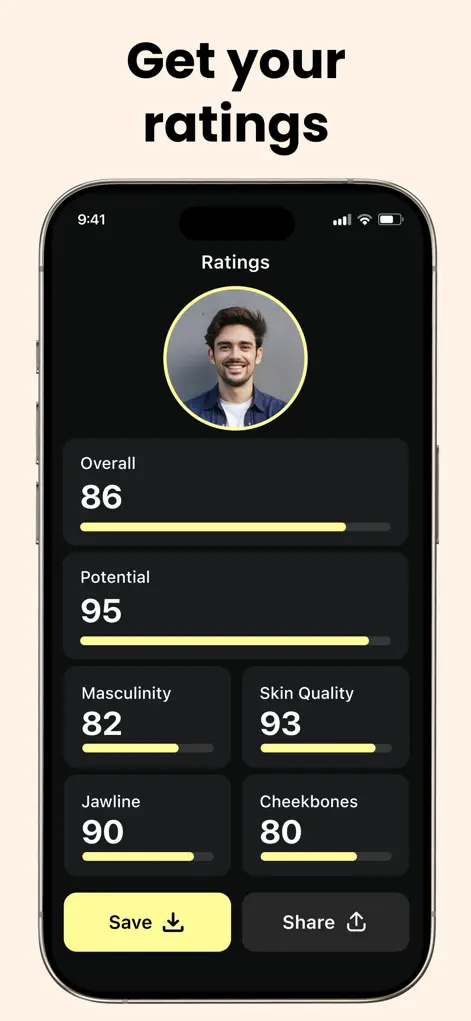
Step-by-Step: Facial Symmetry Test: Measure Yours with AI
- Scan with a dead-straight photo. Symmetry measurement is extra sensitive to angle — camera at eye level, face square to the lens.
- Get your symmetry evaluation. The AI maps both sides of your face and scores the alignment.
- Check the influenceable factors. Review the advice hub for exercises and styling that visually balance features — brows and hair do more than people expect.
- Re-measure quarterly. Symmetry changes slowly if at all; track it a few times a year rather than weekly.
Getting a symmetry reading you can trust
Symmetry is measured by comparing the two halves of your face, so anything that makes one side look different in the photo shows up as asymmetry. A slight head turn, light coming from one side or a lopsided smile can shift the result even though your face hasn't changed.
For a fair reading, face a window so light falls evenly on both cheeks, hold the phone straight ahead at eye level, relax your mouth and look into the lens. Pull your hair back from your face and take off glasses if they sit unevenly.
Keep in mind that you're used to seeing your face mirrored. A photo that isn't flipped can look strangely uneven to you even when the scan finds nothing unusual. And if an asymmetry appears suddenly, such as one side of the face drooping or swelling, see a doctor rather than scanning again.
Everyday habits that affect how balanced you look
Most of what you can influence is grooming and habit. None of it changes bone structure, but it can change how even your features read in person and in photos.
- Shape both eyebrows to the same starting point, arch and length; a brow technician can help if you're unsure.
- Experiment with your hair part. A center part often makes differences between the sides more noticeable, while a side part can soften them.
- Notice whether you chew mostly on one side or always sleep on the same cheek, and vary it where that's comfortable.
- Keep beard and stubble lines trimmed to match on both sides of the jaw.
- In photos, turn slightly toward the side you prefer instead of shooting dead-on.
Get Your Baseline Rating
LooksBoost AI is free to download on the App Store. Scan your first selfie and start your plan in under a minute.
⬇ Download LooksBoost AIFrequently Asked Questions
Is perfect symmetry the goal?
No — and it doesn't exist. The goal is knowing your baseline and making the easy, high-visibility balance improvements.
Can facial exercises improve symmetry?
They can improve muscle tone and balance on the softer tissues; they won't change bone. Consistency over months is what shows.
How do hairstyles affect perceived symmetry?
Substantially — parts, volume, and framing can visually offset asymmetries, which is why the app pairs symmetry scores with hairstyle advice.
LooksBoost AI does not provide medical advice. All recommendations are grooming and self-improvement suggestions — consult a professional before making significant changes.